There was a place I sometimes walked, at the end of Avenue 18 near railroad tracks and the L.A. River. Three little houses were the remnant of an early 20th century neighborhood. They had been built in 1905. All around were small and tired looking industrial buildings and the sprawling parking lots of the Young-Nak Presbyteran Church. A chain link fence prevented entry to the river and the tracks.
One evening in May 2013. I noticed construction was going on. The gate to the fence had been left open, so I let my Buddy sniff around there.
I went home and found this picture, taken 4 years earlier.
From the historical picture I saw, it looked like there had been nothing but an old road with railroad spurs before the land was cleared.
From the other side, at Avenue 19, it looked like this
I don't know when the news caught up with me that this was to be the Ed Reyes River Greenway. L.A. Stormwater had announced the groundbreaking in October 2012, but I knew nothing about it until the middle of 2013, at which time it was supposed to have opened already.
I read that the was not just a small park. In fact, being a park was to be the secondary function. there would be abiofiltration system to clean the urban runoff water from the storm drains that collects water from 135 acres of mostly industrial land. This would be pumped by the solar power that would also light the park at night.
I took a few pictures through the chain link fence on Ave. 19 around that time.
It was working and ready to open in February 2014, but couldn't officially open until a fence was installed. Materials had been stolen during the construction, so it could not be left unfenced. However, the temporary fence was not doing much good, and I managed to slip in for a few pictures. Because it was a project of the Bureau of Sanitation rather than the Department of Recreation and Parks, the usual funding was not available.
By April, men were at work installing fences on both sides.
Then in May, it opened at last. The Matalija poppies were in bloom. Buddy likes it here.
I photographed the informational panels explaining how the system works. Things like these can get tagged up in a short period of time.
It would be hard to read it all from your computer screen, so I've posted the words here:
“The Ed P. Reyes River greenway on the north bank of the Los
Angeles River daylights stormwater runoff
from an existing storm drain that once delivered untreated runoff with
high levels of pollution to the river.
The greenway mimics a dry-creek or arroyo ecosystem and supports a
biological community that filters and further cleans runoff. The non-motorized public access between
Avenues 18 and 19 represents a new and emerging street type for our city called
a “Stormwater Greenway.” As Stormwater Greeways enhance the natural processes
that clean our waters, they also transform our streets by offering new
economic, environmental, and social opportunities.
“Prior to the natural treatment process large quantities of
trash and sediment are removed with a structure called a hydrodynamic
separator. This allows large sized
pollutants to be easily collected and removed.
Next, dry-weather runoff and a managed volume of the most polluted
stormwater runoff called the “first-flush” enters the basin. Larger storm volumes either bypass the
hydrodynamic separator, or enter the basin to overflow back to the original
storm drain. Solar panels drive the
pumps that circulate stormwater to areas where it can be further treated, or
“polished” by bacterial organisms, and used to water plants in the landcape.
“Green infrastructure relies on the power of sunlight, and
the organism in soils and on plant roots to treat pollutants in stormwater
runoff. Because it is economical and
provides recreational and habitat benefits, it is the City’s preferred approach to maintain healthy waters and to support
sustainable communities. Unlike traditional storm drain systems, which rely on
pipes to move and to dispose of rainwater, green infrastructure directs runoff
to locations where vegetation and natural processes help to control
pollution. Infiltration and reuse also
helps to reduce flooding downstream.
Replacing concrete with living soils and other permeable surfaces, and
providing more space for natural processes to flourish within our urban environments,
enhances flood management, air quality, habitat, and recreational opportunities.
The Ed P. Reyes River Greenway at the terminus of Humboldt Street is one of the
first among many greenways proposed to extend the natural benefits of green
infrastructure into our urban watersheds.
“While infiltration and evaporation reduce the volumes of
water that flow downstream, specialized fungae called ”mycorrhize” create a
vast network of cells called “hyphae” in the soil. The huphae seek out water and nutrients
bringing them nearer to root zones where bacteria, working in association with
plant root hairs, naturally degrade or absorb pollutants.”
When I achieve a greater understanding of this myself, I explain it in my own words. In the meantime, I'm posting a few of the diagrams on the panels.
I thought that for something with so many ecological and esthetic benefits, the Ed. P. Reyes River Greenway was not getting enough fanfare.
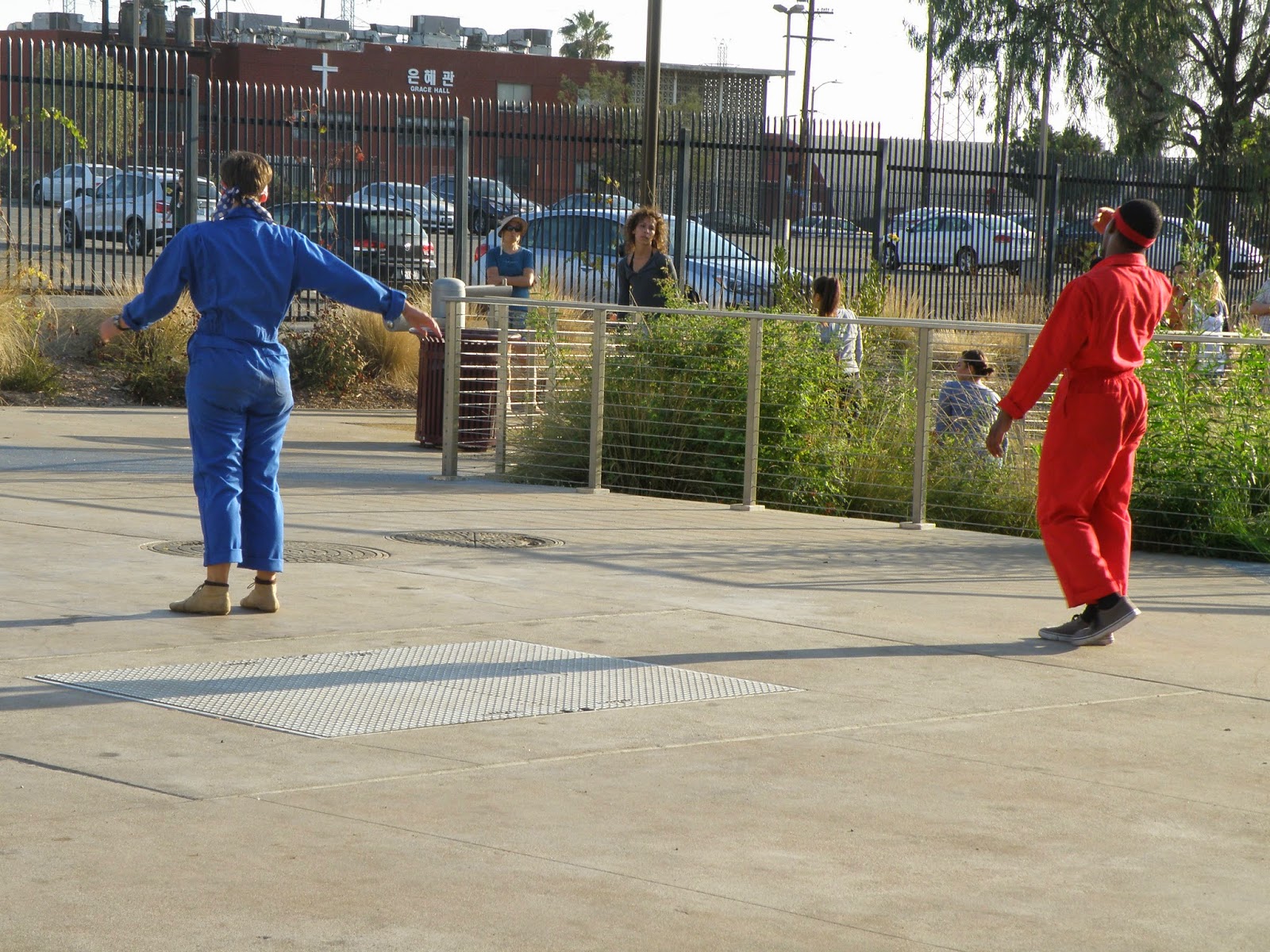
I was happy on Oct. 26, when the Greenway was blessed with dancers. there were quite a few spectators, not just neighborhood dog owners.

This dancer had a costume made of rubber disposable gloves and crumpled newspaper, but unfortunately she was done dancing by the time I arrived.
It's a great place to watch Metrolink roll by, too.
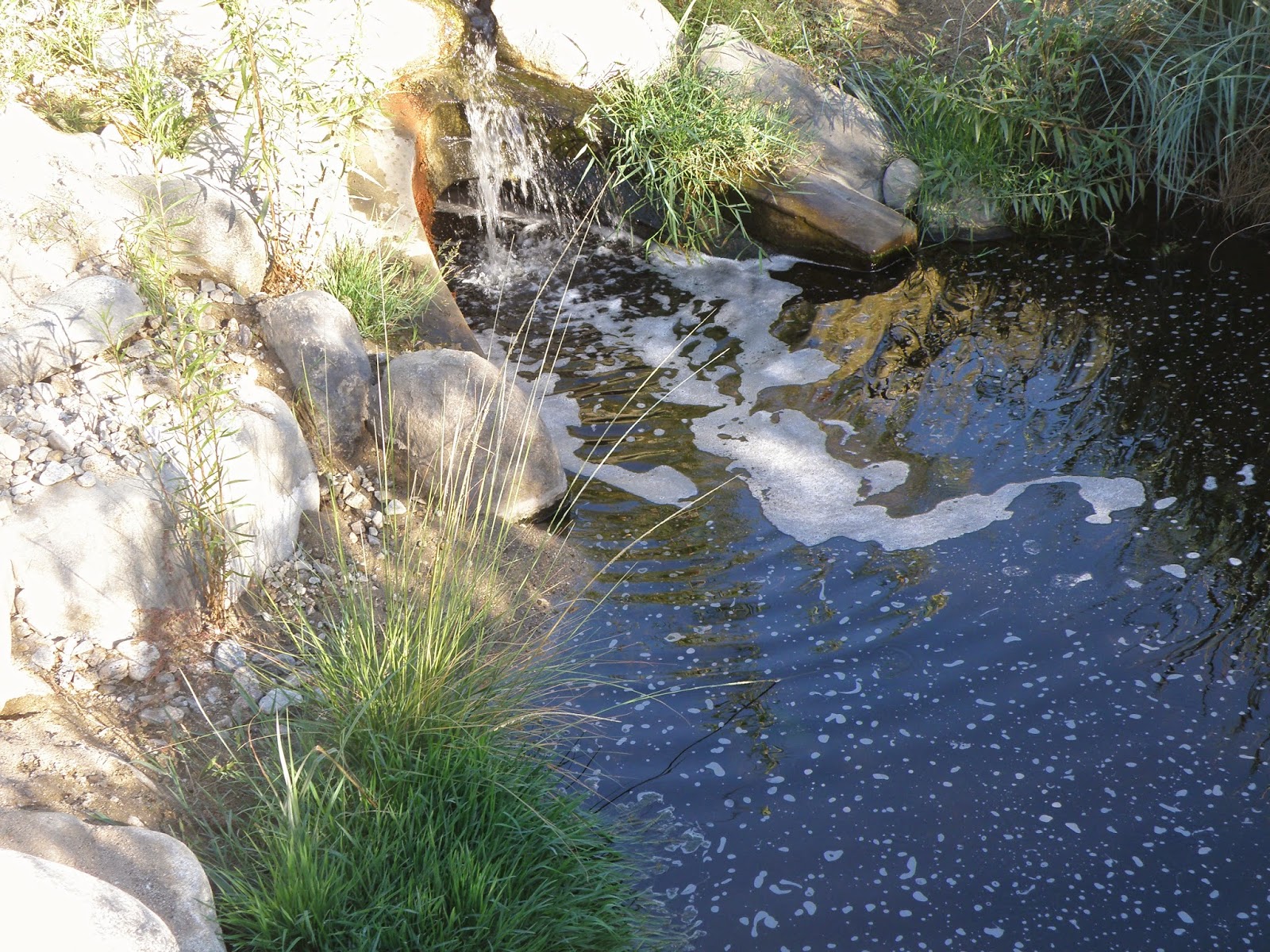
Even more exciting than the dancers was the rain that fell on the night of October 31. Five days later, I heard the sound of water in the waterfall. It's beautiful to see this creation at work.